Why Start an Indoor Herb Garden?
There’s something genuinely satisfying about snipping a handful of fresh basil into a pasta sauce or muddling mint straight from your kitchen windowsill. An indoor herb garden puts that pleasure within arm’s reach, no backyard required. Beyond the culinary perks, growing herbs indoors connects you to a slower, more intentional rhythm — one where you notice when a plant is thriving and feel a small sense of accomplishment every time you harvest.
The practical benefits stack up quickly too. Fresh herbs at the grocery store are expensive, often sold in quantities far larger than you need, and they wilt within days. A small pot of living rosemary or a herb garden window box filled with chives and parsley pays for itself after just a few uses. And if you’re determined to keep your garden going through the colder months, growing herbs indoors in winter means you never have to go without flavor just because there’s frost on the ground.
Best Herbs to Grow Indoors
Not every herb is equally well-suited to life inside your home, so choosing wisely at the start saves a lot of frustration. Some herbs are compact, forgiving, and eager to grow under typical indoor conditions. Others, like lavender or large woody rosemary bushes, can be fussier and may struggle without very bright light.
The best herbs to grow indoors for most beginners include:
- Basil — Loves warmth and bright light, produces abundantly, and is endlessly useful in the kitchen. It does need a sunny spot but rewards your attention generously.
- Mint — Nearly impossible to kill and spreads enthusiastically. Keep it in its own container so it doesn’t crowd out neighbors.
- Chives — One of the most low-maintenance herbs you can grow. They tolerate lower light levels better than most and bounce back quickly after harvesting.
- Parsley — Slower to establish but long-lasting. Both flat-leaf and curly varieties do well in containers with moderate light.
- Thyme — Compact and drought-tolerant, thyme thrives on a sunny windowsill and doesn’t mind if you occasionally forget to water it.
- Cilantro — Fast-growing and prefers cooler temperatures, making it a great choice for fall and winter growing indoors.
- Oregano — Hardy and flavorful, oregano handles indoor conditions well and is a workhorse in Mediterranean and Mexican cooking.
If you’re just getting started and want to simplify the process, an indoor herb garden kit can be a great investment. These kits typically include pre-seeded pods, containers, and a grow light, removing much of the guesswork about what to plant and how to set everything up.
Choosing the Right Containers and Soil
Container choice matters more than most beginners realize. Herbs generally have one non-negotiable requirement: drainage. Roots sitting in waterlogged soil will rot, and that’s usually what kills an otherwise healthy plant. Whatever container you choose — terracotta pots, ceramic planters, a long herb garden window box, or simple plastic growers — make sure it has drainage holes at the bottom.
Terracotta is a popular choice because it’s porous, allowing excess moisture to escape through the sides of the pot. This is especially helpful for thyme, rosemary, and oregano, which prefer drier conditions. For herbs like basil and mint that like consistent moisture, plastic or glazed ceramic containers hold water a bit longer, which can actually work in your favor.
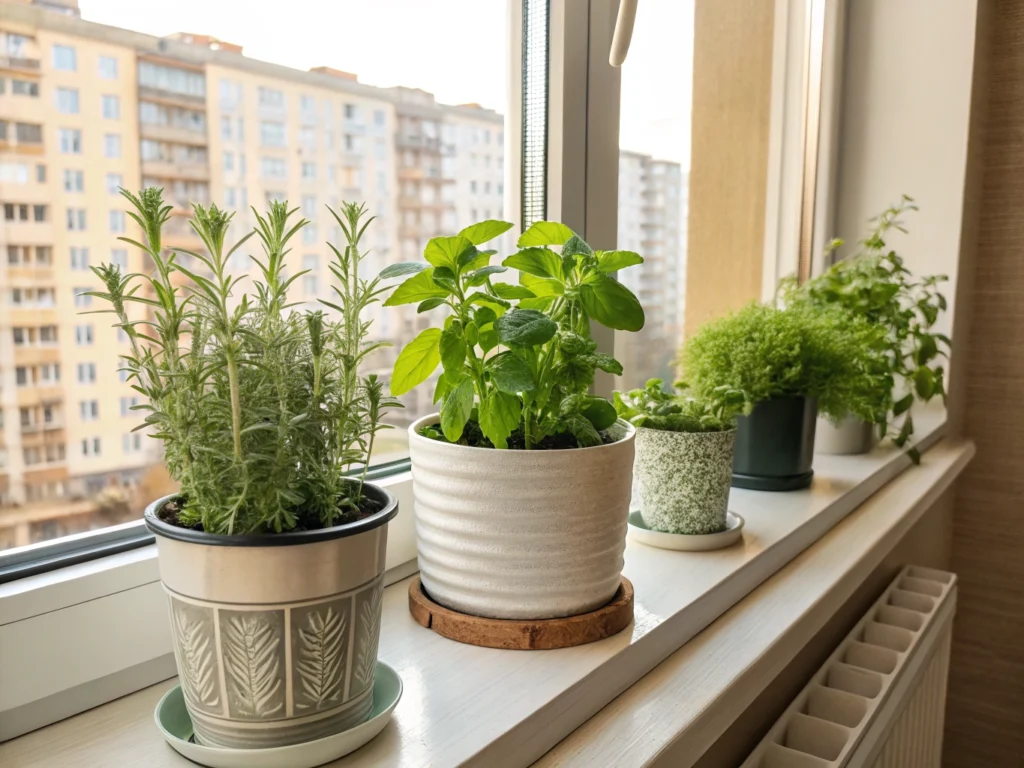
A window box style planter works beautifully on a deep sill or placed directly in front of a sunny window. It gives you room to grow three or four different herbs side by side, which is both space-efficient and visually appealing. Just be mindful of pairing herbs with similar water needs — thyme and basil, for instance, prefer different moisture levels, so they’re better kept in separate containers.
For soil, skip the all-purpose potting mix if you can and opt for one specifically formulated for herbs or vegetables. These blends tend to be lighter and better-draining. You can also improve any standard potting soil by mixing in a small amount of perlite, which increases drainage and prevents compaction over time. Avoid using garden soil from outdoors — it’s too dense for containers and may harbor pests or pathogens.
Light, Water, and Temperature Requirements
Light is the single biggest factor in whether your indoor herb garden flourishes or struggles. Most culinary herbs are Mediterranean in origin, meaning they evolved to love long, sunny days. Indoors, that typically translates to needing at least six hours of bright, direct sunlight per day. A south- or west-facing window is usually your best bet.
If your space doesn’t get strong natural light, don’t give up. Grow lights have become remarkably affordable and effective, and a simple full-spectrum LED strip or clip-on grow light positioned a few inches above your plants can fully compensate for a dim apartment. This is particularly useful for growing herbs indoors in winter, when the days are short and window light is often weak and angled.
Watch your plants for clues. Leggy, stretched-out growth with widely spaced leaves is a classic sign that a herb is reaching for more light. Small, pale, or yellowing leaves can also point to insufficient light exposure.
Watering is where many indoor gardeners go wrong, usually by doing too much of it. The most reliable method is to stick your finger about an inch into the soil — if it feels dry at that depth, it’s time to water thoroughly until it flows out the drainage holes. Then let it dry out again before watering. Most herbs prefer this “soak and dry” approach over frequent shallow watering.
Temperature-wise, most herbs are happiest between 60°F and 75°F, which conveniently aligns with average home temperatures. What they dislike is inconsistency — cold drafts from windows in winter, blasts of hot air from heating vents, or being placed too close to a radiator. Try to find a stable spot where temperatures don’t swing dramatically throughout the day.
How to Plant and Maintain Your Indoor Herb Garden
You have two main options for getting started: planting from seed or buying young transplants from a nursery or garden center. Seeds are cheaper and give you more variety, but they require patience — most herbs take two to four weeks just to germinate, and several more weeks before they’re large enough to harvest. Young transplants give you a head start and are often the better choice for beginners who want to see results quickly.
When planting, fill your container to about an inch below the rim to give yourself room to water without overflow. If you’re transplanting a seedling from a nursery pot, gently loosen the root ball before placing it in the new container and backfill with fresh potting mix. Water it in well to settle the soil around the roots.
Ongoing maintenance is mostly about staying observant. Check soil moisture every couple of days, rotate your pots occasionally so all sides of the plant get even light exposure, and remove any dead or yellowing leaves promptly. Fertilizing once or twice a month with a diluted liquid fertilizer (half the recommended strength is usually enough) keeps herbs growing vigorously without pushing excessive leafy growth that dilutes flavor.
Pinching is a technique that surprises many new growers with how well it works. Regularly pinching off the growing tips of herbs like basil and mint encourages them to branch out and grow bushier rather than tall and spindly. It also delays flowering, which is important — once a herb “bolts” and goes to seed, the leaves often become bitter and growth slows significantly.
Harvesting and Using Your Fresh Herbs
One of the most common mistakes beginners make is waiting too long to harvest. You don’t need to wait until a plant is enormous to start using it. In fact, regular harvesting is one of the best things you can do for your herbs — it stimulates new growth and keeps plants compact and productive.
A good rule of thumb is never to remove more than one-third of the plant at a time. This gives it enough foliage to continue photosynthesizing and recovering. Use clean, sharp scissors or pruning snips rather than tearing by hand, which can damage stems and create entry points for disease.
Fresh herbs can transform everyday cooking in ways that dried herbs simply can’t match. Toss freshly chopped chives over scrambled eggs, layer basil on a Caprese salad, stir whole thyme sprigs into soups and braises, or blend parsley into chimichurri. You can also preserve a surplus by freezing chopped herbs in olive oil in an ice cube tray — a trick that locks in flavor beautifully for use throughout the year.
Starting an indoor herb garden doesn’t require a green thumb, a lot of space, or a significant budget. With the right herbs, decent light, and a bit of consistent attention, you can be harvesting fresh flavor from your own kitchen within weeks.
Frequently Asked Questions
What is the easiest herb to grow indoors for beginners?
Mint is widely considered the easiest herb to grow indoors for beginners. It’s incredibly resilient, tolerates a range of light conditions, and bounces back quickly even after neglect. Chives are a close second — they’re slow to fuss, handle lower light reasonably well, and regrow rapidly after cutting. Either of these makes an excellent first herb for someone just getting started.
How much sunlight does an indoor herb garden need each day?
Most culinary herbs need at least six hours of bright light per day, and ideally closer to eight. A south- or west-facing window is usually the best placement in a typical home. If natural light is limited — especially during the shorter days of winter — a full-spectrum grow light can easily supplement or even replace sunlight, making it possible to maintain a productive herb garden in virtually any room.
Can I grow an indoor herb garden without a window?
Yes, absolutely. While a sunny window is ideal, it’s not a dealbreaker. Full-spectrum LED grow lights designed for plants can provide everything herbs need to thrive, and they’re energy-efficient and widely available. Many indoor herb garden kits come with built-in grow lights specifically for this purpose. Just make sure the light is on for roughly 12 to 16 hours a day to mimic the natural sunlight hours herbs prefer.